When the Desert Pullout Fails: A Guide to Recovery in Dubai
Driving in Dubai often means navigating between the city's pristine highways and the rugged beauty of the surrounding desert. Most people think of sand dunes as a backdrop for weekend adventures, but for anyone who has spent time behind the wheel here, the desert is also a real challenge. I have seen it happen more times than I can count: a driver takes a turn too fast on a sandy shoulder, or misjudges a soft patch near the road, and suddenly the vehicle is stuck. That moment when you realize you need a desert pullout is the point where experience meets reality.
A desert pullout, in the context of driving in the UAE, is not a scenic overlook. It is the act of extracting a vehicle from sand, gravel, or soft ground where the tires have lost traction. This is a specific skill that requires the right equipment, a calm head, and often a helping hand. I have been on both sides of this situation, as a driver who once thought I could free my own car and as someone who has helped others in the same spot. The truth is that a desert pullout is rarely straightforward, and understanding what to expect can save you hours of frustration and potential damage to your vehicle.
Why Vehicles Get Stuck in the Desert
The desert around Dubai is not just sand. It is a mix of fine dust, loose gravel, and occasional hardpan that can deceive even an experienced driver. The main culprit is the lack of friction. When your tires spin on loose sand, they dig down instead of pushing forward. This is especially common on the shoulders of Sheikh Zayed Road, where the transition from asphalt to sand is abrupt. I have seen cars and even heavy trucks sink in just a few seconds after veering off the pavement, especially during the hotter months when the sand is dry and powdery.
Another frequent scenario involves off-road driving. Many residents enjoy weekend trips to Al Ain or the dunes near Ras Al Khaimah, and a moment of overconfidence can leave you axle-deep in sand. Even the best 4x4s can get stuck if the driver reduces tire pressure too late or takes a slope at the wrong angle. In these cases, a desert pullout is not just about pulling the vehicle out. It is about doing so without damaging the undercarriage, the drivetrain, or the environment.

What a Proper Desert Pullout Involves
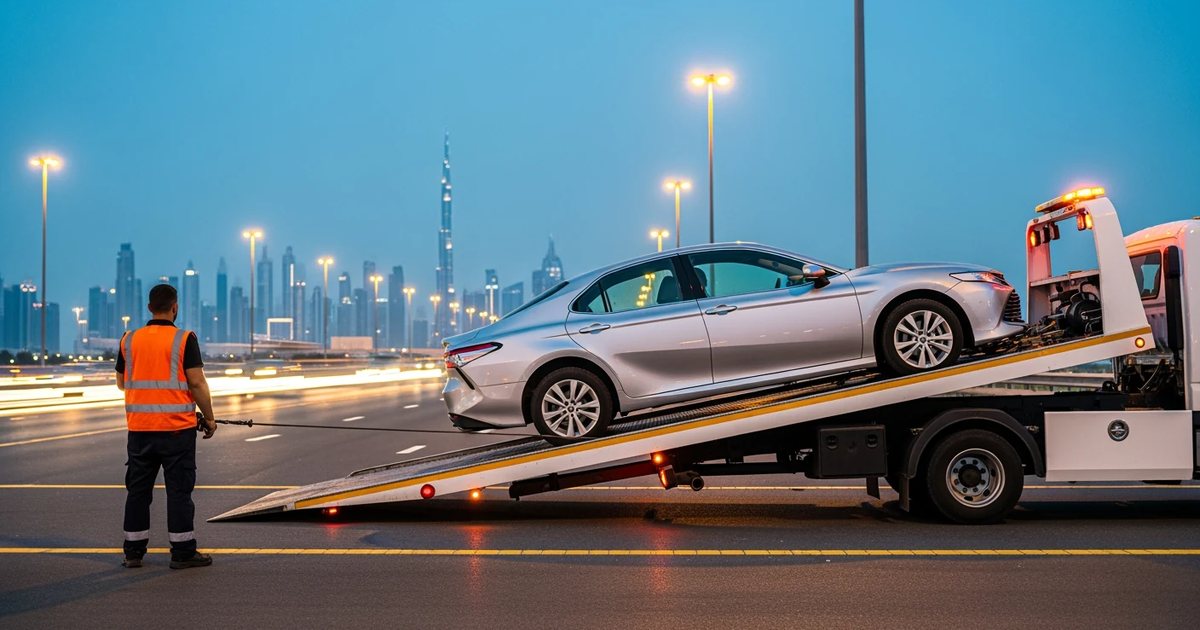
A professional desert pullout uses a combination of techniques and tools. The most common method involves a flatbed tow truck or a heavy duty recovery vehicle that can reach the stuck car without getting stuck itself. The recovery operator will assess the situation, check the depth of the sand, and decide whether to use a winch, a tow strap, or a combination of both. I have watched recovery teams work in the soft sand near Sharjah, where the ground shifts under their feet. They place boards or sand mats under the tires to give them something solid to grip, then slowly pull the vehicle out at a precise angle.
One thing many drivers do not realize is that a desert pullout often requires deflating the tires of the stuck vehicle to increase surface area. This is a temporary measure that works well in sand but needs to be reversed once the car is back on solid ground. A good recovery service will handle this as part of the process. They will also check for any damage to the suspension, the oil pan, or the exhaust system before you drive away. This kind of thoroughness is what separates a proper recovery from a quick tug that might cause more problems later.
Common Mistakes People Make
Over the years, I have seen drivers try to dig themselves out with bare hands, use a jack on soft sand, or attach a tow rope to the wrong part of the car. These mistakes can turn a simple stuck vehicle into a broken one. For example, yanking a car out with a chain attached to the rear axle can bend the frame. Another common error is accepting help from a passing motorist who does not have the right gear. A random tow with a rope can snap, fly back, and cause injury or damage. If you are stuck, the safest call is to request Emergency Roadside Assistance from a service that specializes in desert pullouts and has the proper flatbed tow truck or heavy duty recovery equipment.
There is also the question of timing. Many people wait until they have been stuck for hours before calling for help, hoping that a friend or a stranger will come along. In the UAE summer, this is dangerous. The heat inside a car can rise to life-threatening levels in under an hour. Calling for a desert pullout early is not an admission of defeat; it is a smart decision that protects you and your passengers.
Beyond the Sand: Related Services That Help
A desert pullout is often just the first step. Once the vehicle is free, it may need additional services. Battery jump start is common because the engine may have been running while stuck, draining the battery as the driver tried to rock the car out. Fuel delivery can be needed if the driver ran low after a long detour through the dunes. Tire change is another frequent requirement, as sand can cause a puncture or damage the sidewall. Lockout assistance also comes into play when a driver accidentally locks the keys inside while trying to flag down help. All of these are part of the broader category of roadside assistance that keeps drivers safe across Dubai, Abu Dhabi, Sharjah, and the other emirates.
On-site repair is another valuable option. Sometimes the issue is not just being stuck but a mechanical failure that caused the vehicle to leave the road in the first place. A professional recovery team can perform basic repairs on the spot, such as fixing a broken belt or replacing a hose, which saves you the cost and delay of a full tow to a garage.
Legal and Safety Considerations
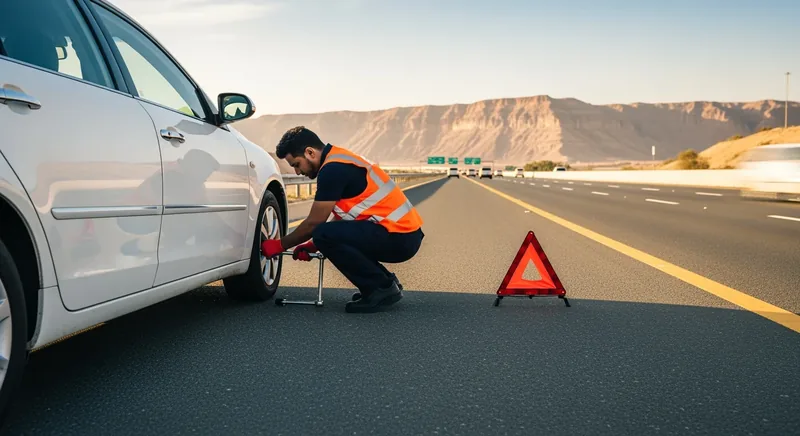
UAE Traffic Laws are clear about what to do after a breakdown or an accident. If you are stuck on or near a main road like Sheikh Zayed Road, you must move the vehicle to a safe place as soon as possible. If you cannot, you need to switch on your hazard lights and place a warning triangle behind the car. The Dubai Police may fine you if you leave a hazard on the road without proper warning. This is another reason to call for a desert pullout quickly. The service will handle the recovery and ensure the scene is safe for other road users.
Road safety is not just about following rules. It is about understanding the environment. The desert in the UAE is not a forgiving place. Sand dunes can shift with the wind, and what looks like a solid path can be a trap. If you are planning a trip to the desert, especially areas near Al Ain or Ras Al Khaimah, carry a recovery kit with a shovel, a tow strap, and a tire deflator. But more importantly, know the number of a reliable 24/7 service that can perform a desert pullout in any condition.
I recall helping a friend who got his sedan stuck on a gravel patch near a construction site in Abu Dhabi. He had tried everything: rocking the car, putting cardboard under the wheels, even asking bystanders to push. Nothing worked. We called a recovery service, and within forty minutes a flatbed tow truck arrived. The driver knew exactly where to attach the winch and how to angle the pull. The whole process took less than ten minutes. My friend later told me he wished he had called earlier instead of spending two hours in the heat. That is the lesson: a desert pullout is a job for professionals, not for guesswork.
The next time you are driving on the edge of the desert, remember that the ground can change under you faster than you think. A Vehicle Breakdown does not always mean a mechanical failure. Sometimes it just means the sand won. When that happens, a proper desert pullout is the safest and fastest way to get back on the road.